


Open this article in your preferred AI assistant. ChatGPT and Perplexity receive the prompt directly; Gemini and Claude open while the same summary prompt is copied for you.
WPML alternatives have begun to emerge as a preferred choice for users looking to build faster multilingual workflows, simplify their interface, achieve easier SEO management, and lower translation costs.
Though WPML is a decent WordPress plugin for multilingualization, users often raise concerns regarding its difficult learning curve, the plugin’s performance demands (database bloat, conflict issues with other plugins), and its expensive nature for translation services at scale.
In fact, HubSpot data shows localized content increases user engagement, user attention, and the conversion rate for a website considerably. This competition makes businesses want faster and easier to manage, and more scalable, alternative multilingual plugins to reach and retain international audiences.
We have covered some of the WPML alternatives that offer a great multilingual translation service. Read to learn more!
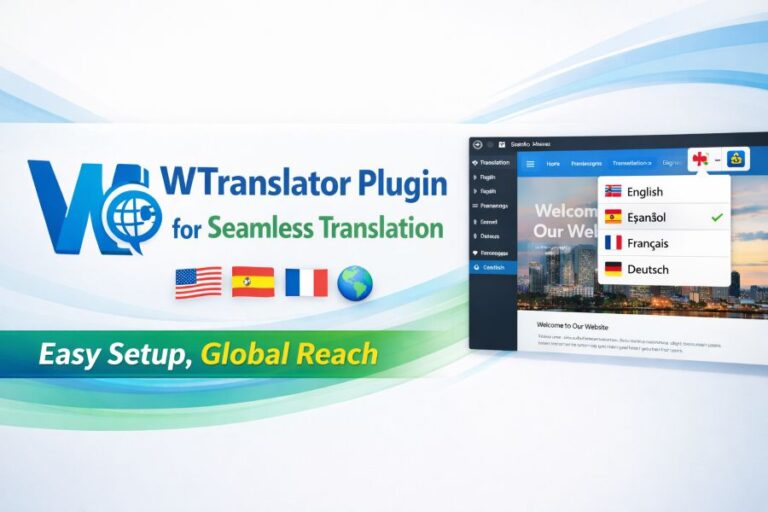
1. WTranslator:
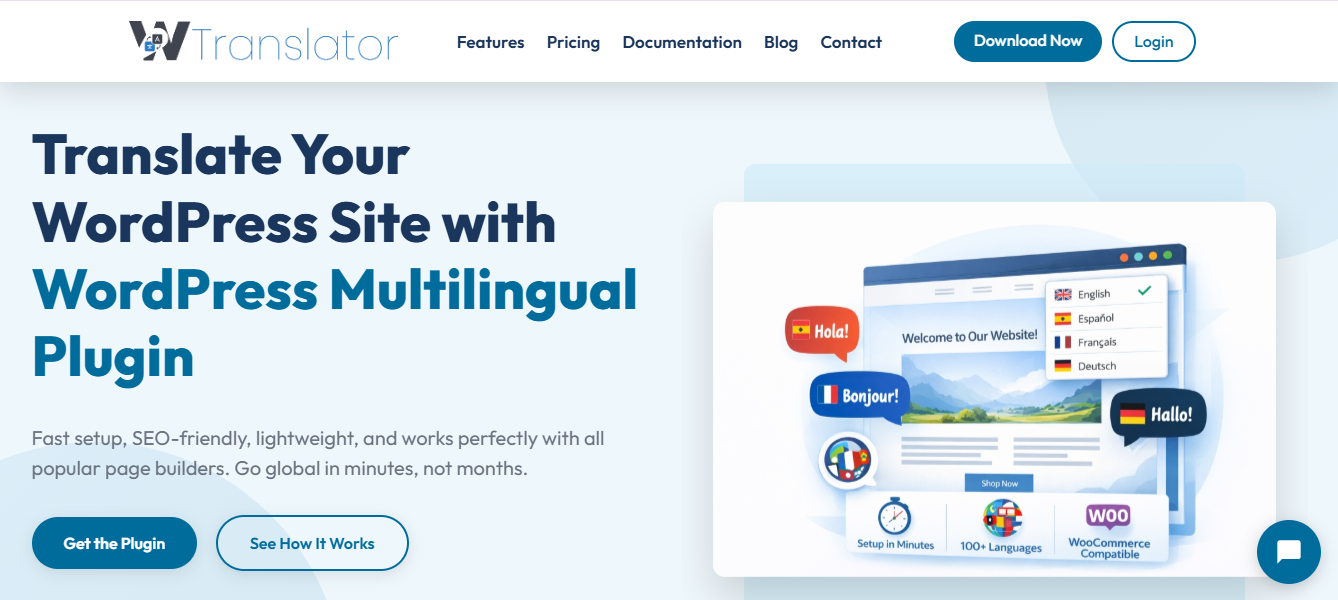
The WTranslator platform aims to assist businesses in streamlining multilingual website management with AI translation workflows and localization features. It is a good fit for businesses that want to publish in multiple languages quickly without setting up excessively complex translation systems.
The plugin prioritizes efficiency of workflow, consistency in translation, and scalable growth of multilingualism for global audiences.
WTranslator’s AI translation workflow is its greatest strength. Its automatic translation capabilities can reduce how long businesses spend localizing each webpage in several languages; they are designed to provide faster publishing workflows, which would enable any multilingual website to produce more content in less time.
The platform also emphasizes multilingual SEO support. SEO-friendly translation structures help translated pages remain visible and indexable in search engines. Better indexing improves opportunities for international organic traffic growth.
WTranslator supports centralized translation management. Teams can organize multilingual projects from a unified dashboard instead of managing scattered translation systems. Centralized workflows improve operational efficiency for agencies and ecommerce businesses.
The platform also helps maintain translation consistency. Consistent terminology across languages improves professionalism and brand identity. Standardized multilingual messaging also improves customer trust across regions.
Localization support is another major strength. Instead of focusing only on literal translation, the platform supports regional adaptation of content. Better localization improves cultural relevance and user engagement.
The platform also supports multilingual content synchronization. When original content changes, translated versions can remain easier to update and maintain. This reduces outdated translated pages that may harm SEO and user experience.
Another useful advantage is scalability. Businesses expanding internationally need systems capable of handling multilingual growth efficiently. Scalable translation workflows reduce operational friction during expansion.
WTranslator also supports multilingual publishing consistency across growing websites. Businesses targeting multiple regions need unified localization management. Consistent multilingual deployment improves operational organization.
The platform’s workflow structure helps businesses scale multilingual SEO strategies more effectively. Faster translation publishing supports international content growth. Efficient localization also improves regional search visibility.
Key Features of WTranslator
- AI-Assisted Translation
- Centralized Translation Dashboard
- Translation Consistency Management
- Multilingual SEO Support
- Content Localization
- Workflow Automation
- Scalable Translation Workflows
- Translation Synchronization
- Simplified User Interface
- Ecommerce Localization Support
- Operational Efficiency
- Flexible Translation Management
Pros of WTranslator
- AI-assisted translation workflows
- Centralized multilingual management
- Simplified localization process
- SEO-friendly translation structure
- Workflow automation support
- Easier multilingual scaling
- Cleaner interface for beginners
- Supports international expansion
- Multilingual synchronization support
- Helpful for ecommerce localization
Cons of WTranslator
- Smaller ecosystem compared to older plugins
- Limited third-party integration history
- Enterprise customization options may vary
2. TranslatePress:
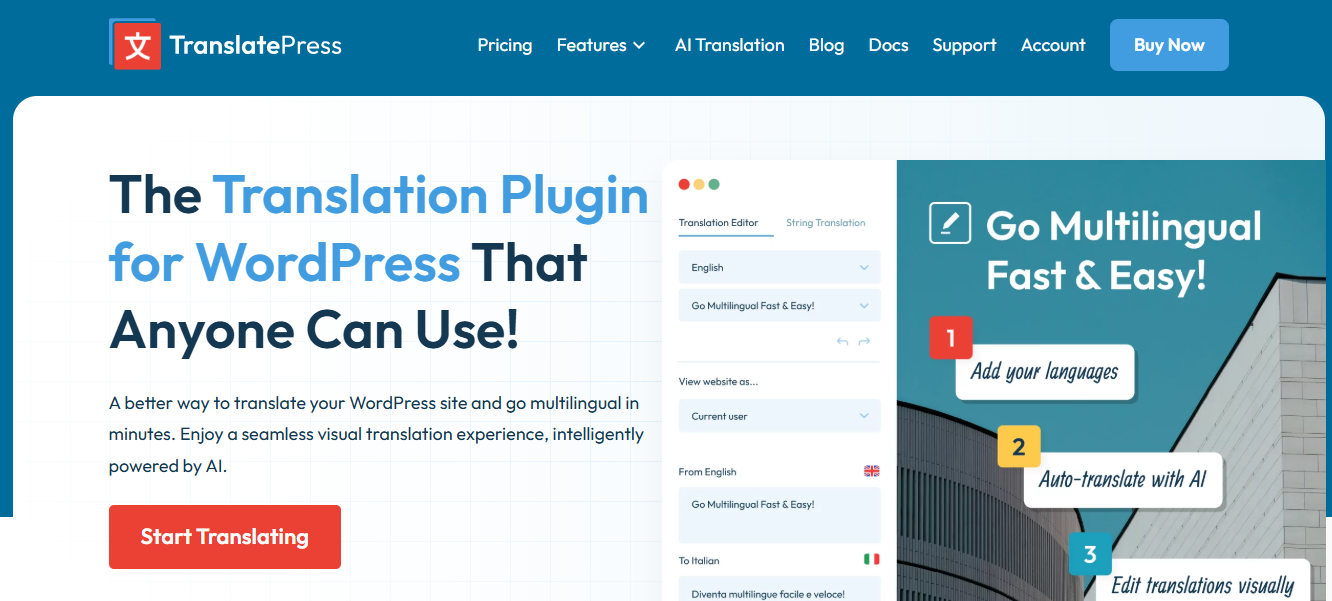
One of the biggest strengths of TranslatePress is its visual translation editor. Users can click directly on page elements and translate content instantly from the live interface. This simplifies multilingual workflows significantly compared to traditional translation systems.
TranslatePress also supports multilingual image translation. Businesses targeting international audiences can localize visual elements more effectively. Visual localization improves content relevance for regional users.
The plugin includes customizable language switchers. Businesses can place language selectors strategically to improve multilingual navigation. Better language accessibility improves user experience and engagement.
Performance optimization is another advantage of TranslatePress. Many users prefer it because of its cleaner workflow structure and simplified management system. Faster multilingual systems contribute positively to SEO performance.
Key Features of TranslatePress
- DeepL integration
- Google Translate support
- SEO-friendly translated URLs
- Metadata translation support
- Hreflang implementation
- WooCommerce compatibility
- Custom language switchers
- User role translation management
- Multilingual SEO optimization
- Visual front-end translation editor
Pros
- Beginner-friendly workflow
- Excellent visual translation interface
- Strong WooCommerce compatibility
- DeepL integration available
- Visual editing improves efficiency
- Supports image localization
Cons
- Large sites may require optimization tuning
- Some workflows still need manual review
- Enterprise workflow depth is limited compared to WPML
- Translation quality depends on editing process
3. Weglot:
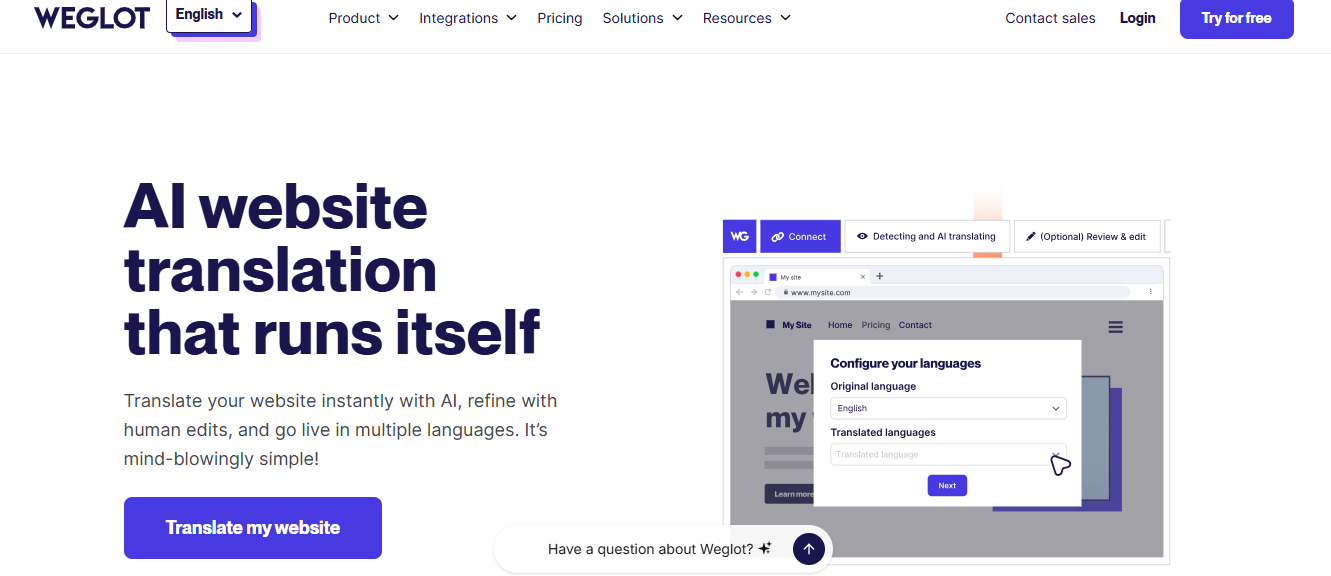
Weglot is a cloud-based website translation solution known for its fast setup process and strong multilingual SEO capabilities. The platform is widely used by businesses that want multilingual functionality without managing complex translation systems. Its SaaS-based architecture allows websites to become multilingual within minutes.
Weglot’s cloud-based architecture reduces server-side translation management complexity. Businesses can simplify multilingual maintenance workflows significantly. Easier maintenance reduces operational overhead.
Weglot includes multilingual analytics and visitor insights. Businesses can monitor language performance and user engagement across regions. Better analytics support international marketing optimization.
One of Weglot’s biggest strengths is speed of implementation. Users can connect their websites and begin translating content quickly without advanced technical configuration. Faster deployment reduces multilingual setup time for growing businesses.
Weglot automatically detects and translates website content. This includes menus, widgets, metadata, and dynamic elements. Automatic detection improves translation coverage across websites.
Key Features of Weglot
- Automatic content detection
- Cloud-based translation system
- SEO-friendly translated URLs
- Hreflang support
- Fast multilingual deployment
- Machine translation workflows
- Visual editing dashboard
- Language switcher customization
- Indexable translated pages
Pros
- Extremely fast setup process
- Supports many website platforms
- Excellent multilingual SEO support
- Beginner-friendly interface
- Reliable multilingual deployment
- Minimal technical setup required
- Good scalability for growing websites
Cons
- Subscription costs increase with traffic
- Long-term pricing can become expensive
- SaaS dependency for translation management
- Machine translations still need human review
- Less backend control than self-hosted systems
4. MultilingualPress:
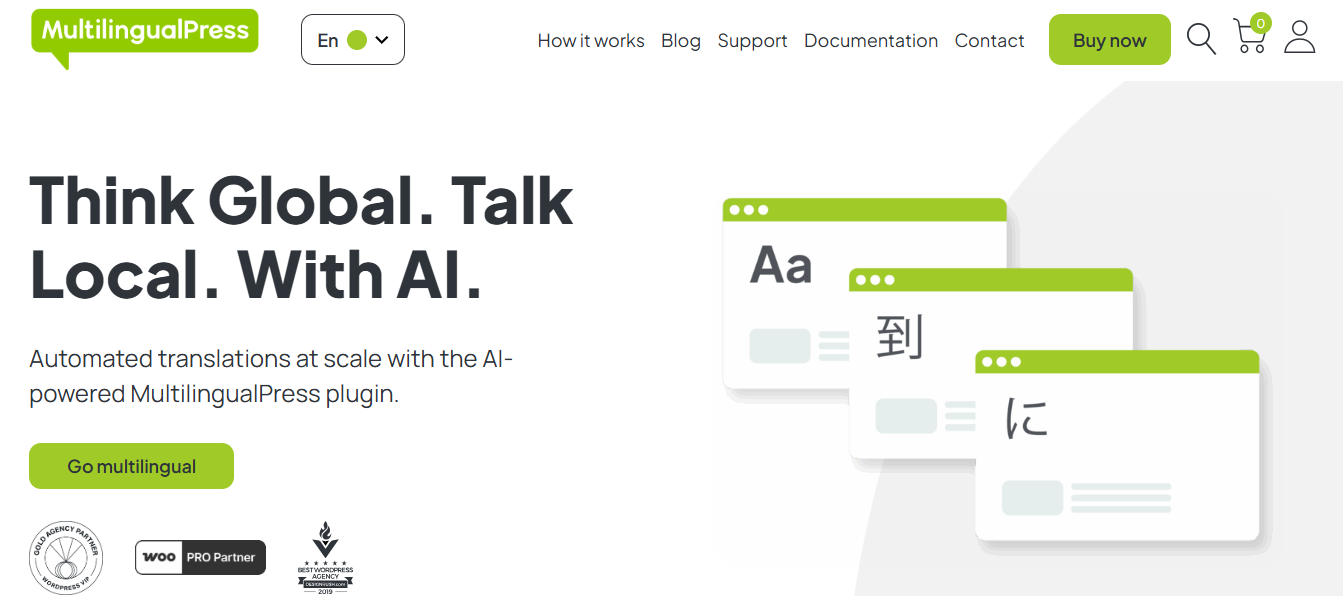
MultilingualPress is a multilingual WordPress solution built around WordPress Multisite architecture. Unlike traditional translation plugins that store all translations inside one website database, MultilingualPress separates each language into its own site within a multisite network. This structure improves flexibility, scalability, and performance for complex multilingual projects.
The plugin supports advanced multilingual SEO management. Independent language sites allow more precise regional optimization. Better SEO control improves international targeting strategies.
MultilingualPress also improves multilingual performance in many cases. Because each language has its own site structure, websites avoid some of the database complexity associated with traditional multilingual plugins. Cleaner architecture can improve backend efficiency.
One of MultilingualPress’s biggest strengths is database separation. Each language operates independently inside its own WordPress site. This reduces translation clutter and improves operational organization.
The plugin supports strong multilingual scalability. Businesses managing large multilingual websites benefit from cleaner architecture and easier language separation. Better organization improves long-term maintainability.
The plugin also allows separate plugin and theme configurations for each language site. Businesses can customize regional experiences more precisely. Better flexibility improves localization depth.
Key Features of MultilingualPress
- WordPress Multisite integration
- Independent language sites
- Separate database structures
- Multilingual SEO support
- Language-specific site management
- Strong scalability support
- Multilingual performance optimization
- Enterprise-friendly architecture
Pros
- Strong scalability for large websites
- Cleaner multilingual architecture
- Better database organization
- Strong regional customization flexibility
- Excellent multisite integration
- Advanced localization capabilities
- Better separation between languages
- Suitable for large multilingual networks
Cons
- Requires WordPress Multisite setup
- More technical than beginner plugins
- Setup process can feel complex initially
- Not ideal for very small websites
- Some workflows require advanced WordPress knowledge
- Premium pricing may be high for small businesses
5. GTranslate
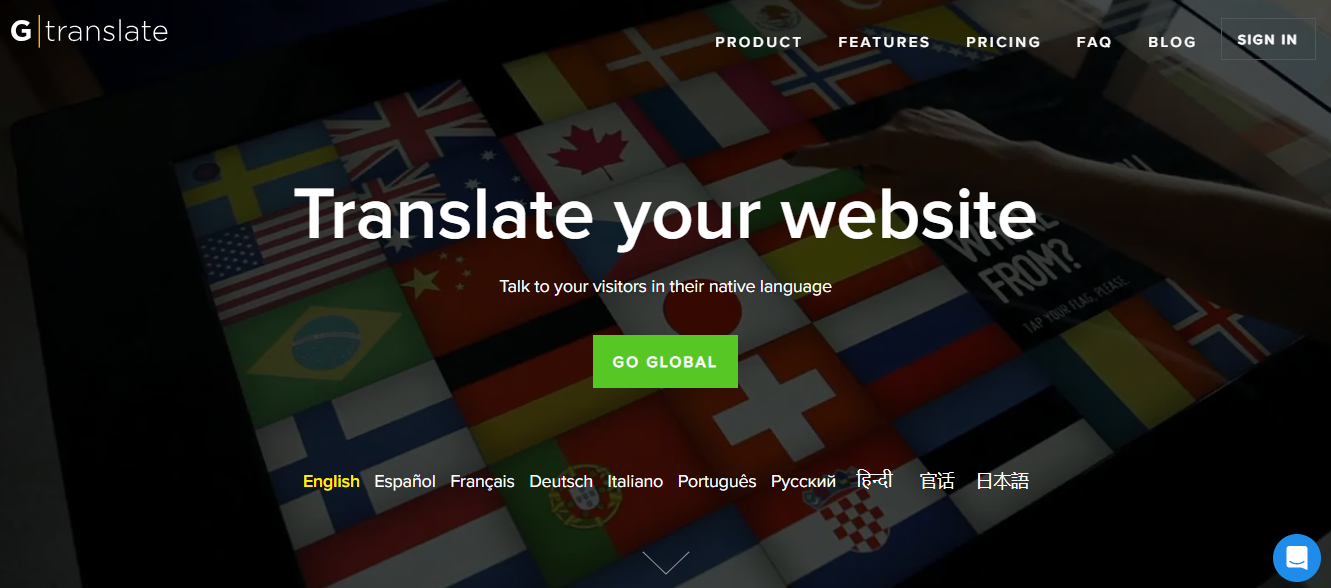
GTranslate is a multilingual translation solution that combines automatic machine translation with multilingual SEO support. The tool offers Google Translate-powered translation engine and is popular for its flexible multilingual deployment options.
It also provides cloud-based translation management for premium users. Centralized management simplifies multilingual workflow organization. Easier maintenance reduces operational overhead.
GTranslate supports multilingual URL structures and translated metadata. SEO-friendly architecture improves regional search performance. Better localization increases international ranking potential.
The platform supports more than 100 languages. Businesses targeting global audiences can expand multilingual coverage rapidly. Broader language support improves international growth opportunities.
The platform offers automatic language detection. Visitors can view websites in their preferred language based on browser settings. Improved accessibility enhances multilingual user experience.
Key Features of GTranslate
- Automatic website translation
- Google Translate integration
- 100+ language support
- Multilingual SEO support
- Metadata translation support
- Browser language detection
- Fast multilingual deployment
- Translation automation workflows
- Regional accessibility support
- Multilingual publishing support
Pros
- Fast automatic translation setup
- Supports many languages
- Strong automation capabilities
- Beginner-friendly implementation
- Good scalability for growing sites
- Flexible language switchers
- Translation automation improves efficiency
- Helpful for rapid multilingual expansion
Cons
- Machine translation quality varies by language
- Premium SEO features require paid plans
- Advanced customization may require premium tiers
- SaaS dependency exists for some workflows
- Translation quality depends heavily on source content
6. Loco Translate
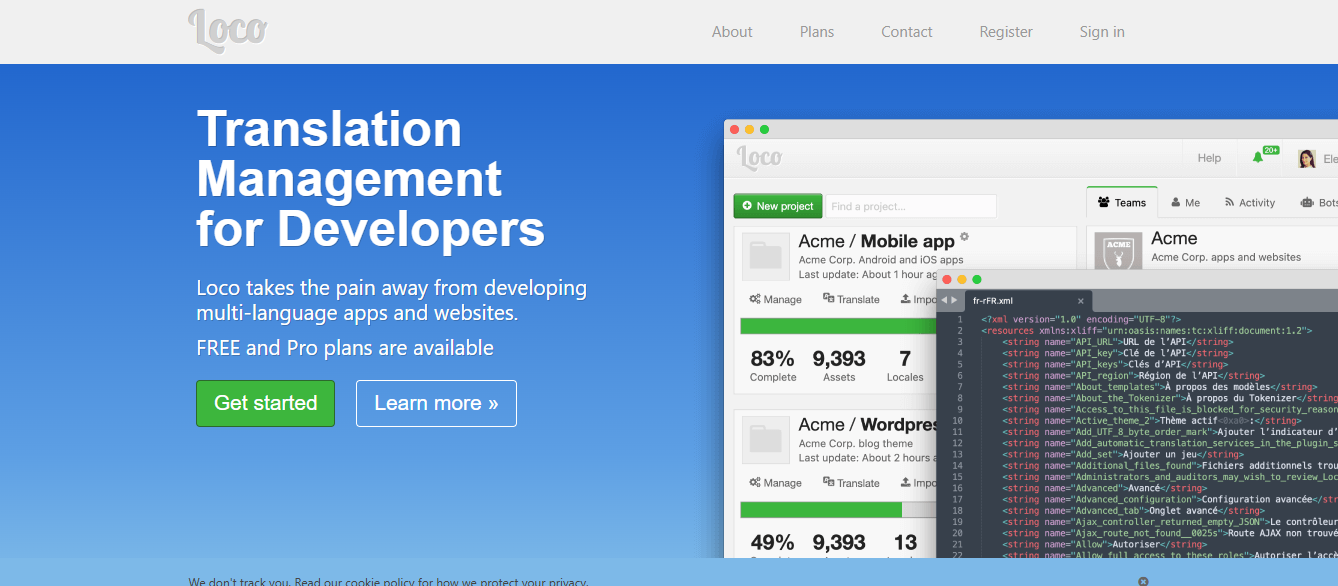
Loco Translate is another WordPress translation plugin focused primarily on translating themes and plugins directly from the WordPress dashboard. Unlike full multilingual website solutions, Loco Translate is designed to help developers, site owners, and administrators localize WordPress interface strings without leaving the admin environment. It is widely used for plugin translation management and localization editing.
Loco Translate also includes syntax highlighting and localization debugging tools. Developers can identify translation issues more efficiently. Improved debugging workflows reduce localization errors.
Loco Translate supports multiple languages and localization configurations. Businesses operating multilingual WordPress systems can manage interface translations more effectively. Flexible localization improves multilingual usability.
VOne of Loco Translate’s biggest strengths is its built-in translation editor. Users can edit translation files directly inside the WordPress dashboard without relying on external software. This simplifies localization workflows for developers and website administrators.
The plugin supports PO and MO translation file management. WordPress themes and plugins often use these file formats for localization. Native support improves compatibility with WordPress translation standards.
Key Features of Loco Translate
- Built-in translation editor
- PO file management
- MO file management
- Translation extraction tools
- In-browser localization editing
- Localization debugging tools
- WordPress-native workflow integration
- Translation file management
- Localization configuration flexibility
Pros
- Easy translation editing inside WordPress
- Strong developer-focused features
- Supports standard WordPress translation formats
- Good theme and plugin compatibility
- No need for external localization software
- Simplifies plugin localization
- Stable WordPress integration
- Faster localization workflow management
- Useful for developers and agencies
Cons
- Not a full multilingual website solution
- No advanced automatic translation workflows
- Limited ecommerce multilingual features
- Requires manual localization work
- Some advanced workflows may require technical knowledge
7. ConveyThis:
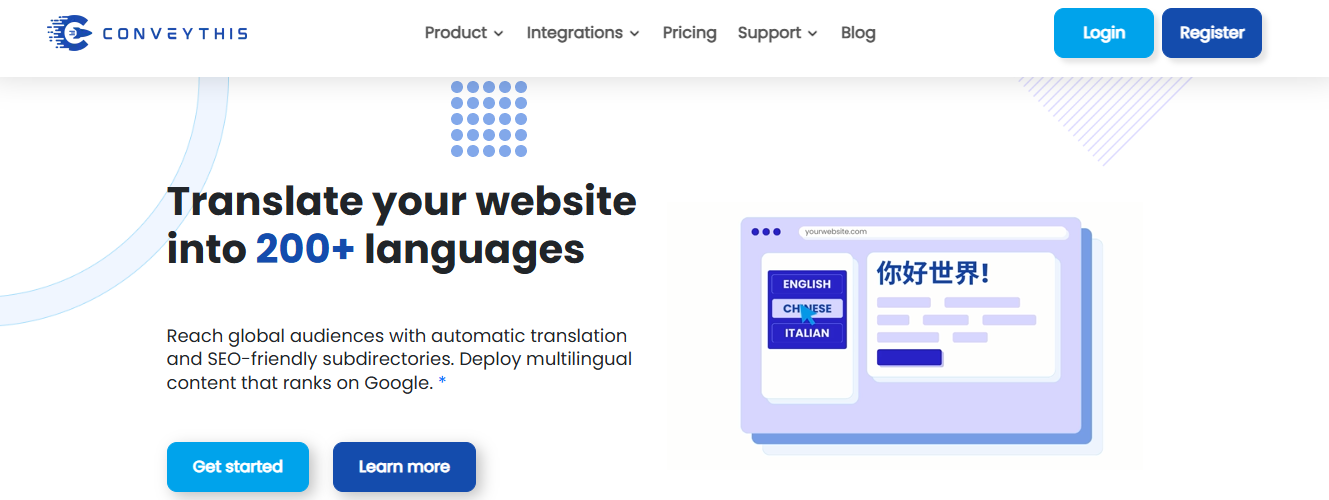
ConveyThis offers customizable language switchers for multilingual navigation. Businesses can optimize language accessibility for different user experiences. Better navigation improves multilingual usability.
The platform supports ecommerce localization workflows. Product pages, checkout elements, and store interfaces can become multilingual. Localized shopping experiences improve international customer confidence.
The platform also includes multilingual analytics and visitor behavior insights. Businesses can monitor regional engagement performance more effectively. Better analytics support international optimization strategies.
The platform supports automatic machine translation combined with manual editing capabilities. Businesses can refine translated content after automation for improved localization quality. Hybrid workflows improve multilingual accuracy.
The platform also includes multilingual SEO optimization features. Translated URLs, metadata localization, and hreflang implementation improve regional search visibility. According to Search Engine Journal, proper international SEO implementation improves multilingual search rankings significantly.
ConveyThis also provides cloud-based translation management. Centralized workflows simplify multilingual content organization and maintenance. Easier management reduces operational overhead for businesses.
The platform supports manual translation editing after machine translation generation. Human review improves translation quality and localization relevance. Better localization increases regional engagement.
Key Features of ConveyThis
- Manual translation editing
- Multilingual SEO optimization
- Translated URL support
- Metadata translation
- Cross-platform compatibility
- Translation workflow automation
- Automatic website translation
- Regional accessibility optimization
- International publishing support
Pros
- Cloud-based management
- Good multilingual scalability
- Cross-platform compatibility
- Flexible language switchers
- Simplified multilingual maintenance
- Helpful analytics capabilities
Cons
- Premium features require higher plans
- Translation review is still necessary for accuracy
- Large multilingual sites may face increasing costs
Why Translated Pages Not Ranking
Many multilingual website owners invest heavily in translation plugins but still struggle to rank translated pages in Google. In most cases, the problem is not the translation itself. The real issue usually involves multilingual SEO implementation, search intent mismatches, weak localization strategies, or technical indexing problems.
According to Google Search Central, multilingual SEO requires proper hreflang implementation, localized content quality, and accurate international targeting. Simply translating content does not guarantee rankings in international search results. Search engines evaluate localization quality, page relevance, and technical SEO consistency.
Poor Hreflang Implementation
Hreflang tags help search engines understand language and regional targeting. Incorrect hreflang implementation often confuses Google about which version of a page should appear in search results. Misconfigured hreflang tags can cause indexing conflicts and ranking instability.
Many multilingual websites accidentally create conflicting hreflang signals. Pages may reference incorrect language versions or incomplete country targeting. These inconsistencies reduce international SEO clarity.
Search engines rely on hreflang relationships to serve the correct localized page. Missing reciprocal tags can weaken multilingual indexing accuracy. Proper hreflang validation is critical for international visibility.
Another common issue involves using incorrect language-country combinations. Businesses often confuse language targeting with regional targeting. For example, Spanish content targeting Mexico differs from Spanish content targeting Spain.
Several SEO studies show that international targeting accuracy directly impacts multilingual rankings. According to Semrush, hreflang errors remain one of the most common multilingual SEO problems. Websites with cleaner international targeting structures generally perform better in regional SERPs.
Many website owners also forget the x-default hreflang implementation. The x-default tag helps search engines understand fallback language behavior. Missing fallback structures can reduce multilingual clarity.
Proper hreflang management improves user experience significantly. Visitors are more likely to stay engaged when they land on the correct language version. Better engagement metrics can indirectly support rankings.
Weak Localization Instead of Translation
Direct translation often fails because user search behavior changes across regions. Keywords rarely translate perfectly between languages. Localization requires adapting content to local intent, culture, and search patterns.
Many translated pages use literal translations that ignore local keyword demand. This creates pages optimized for words users never search. Weak keyword localization reduces organic traffic opportunities.
Localized search intent also differs across regions. English-speaking audiences may search differently from German, French, or Spanish users. International SEO requires region-specific keyword research.
Cultural adaptation also matters for multilingual engagement. Regional phrasing influences trust, readability, and conversions. Better localization improves behavioral SEO signals.
Research from HubSpot found that localized experiences improve engagement rates significantly. Users engage more deeply with culturally adapted content. Higher engagement can improve ranking performance.
Localized metadata also influences click-through rates. Translated titles that sound unnatural reduce SERP engagement. Better CTR often improves ranking potential over time.
Businesses should also localize examples, currencies, units, and references. Regionally adapted content feels more trustworthy. Better trust signals improve user retention and engagement.
How Translation Boosts Organic Traffic Revenue
Translation is no longer just a customer service tool for global companies. Today it is one of the best tools for driving organic traffic. Through localized content, you can increase your keyword visibility, reach otherwise unavailable markets, and drive more international revenue without solely relying on paid traffic.
As indicated by Internet World Stats, English speakers make up less than 26% of internet users in the world. Companies who only optimize content for English-language markets are leaving a significant portion of the world’s internet users completely unreached by their organic traffic driving efforts. With translation you can capture multilingual search traffic your competitors may not currently be targeting.
Here’s how translation can improve your organic revenue.
Translation can unlock new keyword markets:
Each language is its own set of keyword search behaviors. The same keywords that are relevant and perform well in English may have completely different search patterns in other languages like Spanish, German, French, Portuguese, Arabic etc. With translation you can tap into keywords that you would otherwise have no way to rank for.
By focusing on localized keywords, your organic search visibility can be multiplied. One single English article, for example, can have multiple localized versions to compete for different regions, thus creating more ranking opportunities in other languages. Long tail keywords will improve their reach significantly because they tend to be more conversational in different languages than in English.
Even regionally there can be several keyword opportunities per each term depending on the differences in local terminologies. When you use these localized keywords correctly you will gain more click-through traffic, because people prefer clicking on listings in their native language, and this click-through rate will increase your ranking in search engines over time.
Because search engines value relevance and user satisfaction more highly, good localized content that matches users’ needs will naturally be ranked better by the search engines. Competition will also be lessened for you because not many industries operate globally, leaving much space to get to the top when focusing on other markets besides English.
Multilingual Content will increase global search visibility:
Because each localized page you create is another entry point for search engines, having a multilingual site can significantly increase your reach. Websites in multiple languages usually appear for thousands more keywords than their English-only counterparts, meaning a better overall mix of traffic from different countries and cultures.
Localized blog posts will perform much better for global organic traffic growth because many people search for informational content to help them find what they are looking for online.
When you translate your blog posts they can bring in a steady stream of organic traffic from different countries every month. Localized service pages are crucial for capturing commercial-intent searchers and for ranking higher in search results for product/service keywords when they are used in the customer’s native language.
Product descriptions will do similarly well, especially for e-commerce websites. This means you will attract more qualified leads or customers than if you rely on solely English versions, or in case of a larger global enterprise, you can attract thousands more organic visits a month. This will provide for a wider audience reach through organic channels and also reduce your overall dependence on paid traffic as these multilingual posts begin to rank in search.
Google ranks localized pages separately when structured correctly. They are not a replacement of original pages and you get a completely separate result page per language and per search country. Video content has also become a part of SEO and through localized video content, more viewers will find your videos through search.
Finally, as developing countries are increasingly gaining more and more internet users, translating your content now ensures that you can capitalize on this rapid growth in the coming years.
Translation will improve international conversion rates:
Increased organic traffic alone doesn’t make a business grow. It has to translate to conversions. Websites in foreign languages will boost conversions because users trust content in their native language more. This will lead to increased purchase behavior and more generated leads because a translated site signals a more professional and trustworthy experience to potential customers from foreign markets.
Studies found that up to 40% of online shoppers will not buy from websites in foreign languages; so it is evident how important language is to the purchasing decision process. This includes localized call-to-actions (CTAs), checkout process, trust signals and other elements of the website. By utilizing appropriate, localized CTAs, they will have a higher conversion rate than if they were written in another language.
Localized checkouts will decrease cart abandonment and make online shoppers more likely to complete their purchases. A professional and globally-conscious site will also make potential customers feel more secure purchasing from your business and this increases customer retention and the likelihood of becoming a loyal customer who revisits your site.
Personalized translated content can increase engagement with the content, increasing visitor dwell time on page and thus signaling better quality and higher ranking potential for your multilingual content.
Translation will provide long term revenue diversification:
Relying solely on a single language market means the value of your traffic is at risk due to factors such as search engine algorithm changes or increased competition, meaning that revenue can fluctuate quite a bit. By entering several language markets at once through multilingual SEO you can create more stable traffic and therefore ensure a consistent flow of income.
As you diversify your revenue sources across multiple regions you are much less likely to lose large amounts of revenue if one or two markets do not perform as expected. Localized content also makes it easier and more cost-effective to break into new markets, reducing your overall need for costly paid advertising in new regions.
Additionally, when you have a substantial body of translated content, you will begin to create ever-lasting, reliable, long term organic traffic and revenue. This content then works over time, producing sustained traffic growth year after year without significant new investment required per month.
Last, but not least, by building an authority around a multitude of languages you will increase brand authority with each user group and in the process secure the ongoing potential of acquisition on an international level, thus making a more resilient and ultimately more profitable business.
How Multilingual Stores Lose Conversions
Multilingual ecommerce stores often assume that translation alone guarantees international sales growth. In reality, many multilingual stores lose conversions because of poor localization, confusing user experiences, and weak regional optimization. Translation solves only one part of international ecommerce growth.
Research from Shopify shows that localized shopping experiences significantly influence global purchasing behavior. Customers prefer buying from websites that feel native to their region. Weak localization reduces trust and purchasing confidence.
Poorly Localized Product Pages:
Literal product translations often sound robotic or unnatural. Awkward product descriptions reduce customer trust quickly. Poor readability lowers conversion rates significantly.
Localized product messaging improves emotional connection with buyers. Regional audiences respond differently to product language and tone. Better localization improves purchasing confidence.
Many multilingual stores also fail to localize sizing systems. International buyers may become confused by unfamiliar units or measurements. Confusion increases cart abandonment rates.
Localized product benefits also matter. Features emphasized in one country may not influence buyers elsewhere. Regional adaptation improves product relevance.
Research from CSA Research found that consumers strongly prefer localized purchasing experiences. Buyers trust localized stores more than partially translated websites. Trust directly impacts conversions.
Localized reviews and testimonials also improve credibility. Customers feel safer purchasing when social proof matches their language. Better trust signals improve ecommerce performance.
Multilingual stores should also localize product images and promotional banners. Visual localization improves regional relevance. Better presentation increases engagement and conversions.
How to Measure Multilingual SEO Success
Many businesses launch multilingual websites without tracking whether their international SEO strategy is actually working. Measuring multilingual SEO success requires more than tracking translated page traffic. Businesses must analyze regional engagement, conversions, rankings, indexing quality, and user behavior across languages.
According to Google Analytics, segmented audience analysis helps businesses understand regional user behavior more accurately. International SEO success depends heavily on regional performance differences. Granular tracking improves multilingual optimization strategies.
Track International Organic Traffic:
Organic traffic growth is one of the clearest multilingual SEO indicators. Businesses should monitor traffic by country and language separately. Regional segmentation improves international analysis accuracy.
Many multilingual websites experience uneven growth across languages. Some translated pages may perform strongly while others struggle. Language-specific analysis identifies optimization opportunities.
Google Search Console helps track multilingual impressions and clicks. Businesses can compare ranking visibility across regions. Better visibility tracking improves SEO decision-making.
Traffic quality also matters more than raw traffic volume. High bounce rates may indicate localization problems. Better engagement usually reflects stronger multilingual relevance.
Research from Ahrefs shows that multilingual SEO success depends heavily on localized search intent alignment. Rankings alone do not guarantee conversions. Engagement quality matters significantly.
Businesses should also monitor traffic trends after localization updates. Improvements in localized UX often increase organic engagement. Better UX supports stronger SEO outcomes.
International traffic segmentation also helps businesses identify profitable regions. Some countries may generate higher revenue despite lower traffic. Better regional analysis improves growth prioritization.
Monitor Multilingual Conversion Rates:
Traffic without conversions provides limited business value. Businesses should track conversion rates by language and region. Regional conversion analysis improves international optimization strategies.
Different countries often behave differently during purchasing journeys. Checkout friction may vary across languages. Better analysis identifies localization barriers.
Localized CTAs also influence conversion performance. Certain phrases perform better in specific regions. Regional testing improves conversion optimization.
Multilingual ecommerce stores should monitor cart abandonment rates by language. High abandonment often signals trust or usability issues. Better localization reduces purchasing friction.
According to Baymard Institute, usability issues contribute heavily to ecommerce abandonment rates. Multilingual UX problems increase that risk further. Better localization improves user confidence.
Businesses should also track form completion rates across regions. Language complexity may reduce form usability. Simplified localization improves completion rates.
Regional payment preferences also influence multilingual conversions. Customers prefer familiar payment methods. Localized checkout experiences improve transaction success.
Conclusion
These WPML alternatives offer scalable, flexible, and reliable multilingual translation solutions. They focus on helping businesses target international multilingual customers effectively.
We discussed each tool’s features, pros and cons to enable businesses, ecommerce brands and bloggers choose the best tool for their needs. With plenty of multilingual plugins available, choosing the right one can feel confusing. However, this post should make things easier for anyone.
Multilingual plugins are a must-have for serious brands that don’t have a strong localization budget like established brands. They make it easier for beginners to localize their content, targeting clients across the globe.

Comments
0 responsesNo comments yet. Be the first to share your thoughts.