
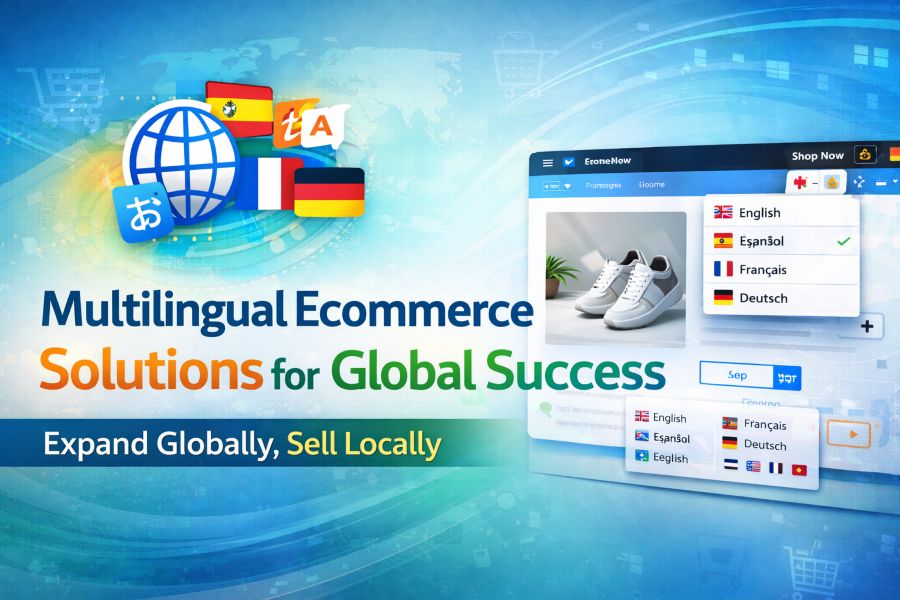
In today’s competitive digital landscape, expanding your eCommerce business globally is a crucial step to gaining a larger market share. One of the most effective ways to reach diverse audiences is through multilingual eCommerce solutions.
Offering content in multiple languages not only enhances user experience but also boosts trust, conversions, and overall customer satisfaction. This article explores the power of multilingual eCommerce and why it’s necessary for businesses seeking international success.
What is Multilingual eCommerce?
Multilingual eCommerce refers to offering your online store in multiple languages to cater to international customers. This is achieved through language translation and localization techniques that ensure the website is culturally relevant and easy to understand.
By integrating multilingual support, businesses can reach a wider audience, increase engagement, and enhance the shopping experience. It also plays a pivotal role in optimizing your site for global search engines, helping you capture the attention of diverse customers.
Creating a multilingual website isn’t just about translating text. It involves understanding cultural nuances, offering regional product variations, and using local payment methods to build trust with potential buyers.
A multilingual WordPress site translator is one such tool that streamlines this process, ensuring accuracy and consistency across all languages. This tool can help businesses scale quickly by making their websites accessible to a global audience.
Why Multilingual Solutions Matter for Your eCommerce Site
For eCommerce businesses aiming to penetrate international markets, multilingual solutions are indispensable. By offering your website in multiple languages, you provide a personalized shopping experience that resonates with customers. This increases the likelihood that they will complete their purchases, as they feel more comfortable navigating a site in their native language. Additionally, having a multilingual website signals to customers that you understand their needs and are committed to delivering a seamless experience.
Localization goes beyond just translating text—it also includes adapting the design and content to suit local preferences. Offering multilingual support can also improve your SEO rankings on international search engines. For instance, when your content is optimized in several languages, you are more likely to rank higher in relevant local searches. Ensuring your product descriptions, blogs, and customer support are multilingual will help you expand your customer base.
Businesses can leverage tools such as Sawa-Tech’s multilingual e-commerce solutions to effectively localize their online stores. By offering translation and customization services, these solutions ensure that your website is tailored to meet the demands of global customers.
Key Benefits of Multilingual eCommerce Solutions
There are numerous advantages to implementing multilingual solutions on your eCommerce site. Here are some key benefits:
- Wider Reach: You can target customers in non-English-speaking countries, increasing your market size exponentially.
- Improved Customer Trust: Consumers are more likely to trust and buy from websites in their native language, leading to higher conversion rates.
- Competitive Advantage: In global markets, offering a localized experience sets you apart from competitors who only cater to English-speaking customers.
- SEO Advantages: Multilingual websites are more likely to rank well on international search engines, enhancing your online visibility.
- Increased Sales: Offering localized versions of your store can boost sales, especially in high-demand international markets.
To achieve all these benefits, eCommerce businesses can use Smartling’s international eCommerce solutions to streamline translation and localization. This solution can help businesses deliver accurate translations, cultural relevance, and effective marketing strategies, all in one.
How to Implement Multilingual Solutions in Your eCommerce Site
Implementing multilingual solutions on your website requires a well-thought-out strategy. The process typically involves the following steps:
- Choose the Right Languages: Understand your target markets and select the languages that will give you the best reach. For instance, Spanish, French, and Mandarin are commonly spoken in many countries around the world.
- Select a Translation Method: You can either hire professional translators or use automated translation tools to manage your multilingual content. However, translation accuracy is crucial for maintaining credibility and trust.
- Localize Your Content: Tailor your website’s content to your target audience’s cultural and regional preferences. This includes using local currency, adjusting product descriptions, and changing graphics or images to better reflect the local culture.
- Optimize for Search Engines: Ensure that your multilingual site is optimized for search engines in each language. This will help you reach your international audience effectively.
- Provide Multilingual Customer Support: Offering customer support in multiple languages can significantly enhance customer satisfaction and encourage repeat purchases.
If you are using a WordPress site, you can easily implement these multilingual features using tools like WTranslator, which provide robust translation services that integrate seamlessly with your platform.
Localization vs. Translation: What’s the Difference?
When setting up a multilingual eCommerce store, it’s important to understand the difference between translation and localization. Translation involves converting text from one language to another, while localization takes it a step further by adapting the content to fit the cultural context of the target audience. This includes adjusting images, colors, symbols, and even product prices to match local preferences.
Localization is especially important for ensuring that your content is not only readable but also relatable to your customers. It ensures that the website feels like a native experience for users, boosting engagement and conversion rates. Many businesses use both translation and localization to ensure their multilingual websites resonate with diverse audiences.
Choosing the Right Multilingual Platform for Your Business
There are several platforms available for creating multilingual eCommerce websites, but it’s essential to choose the right one that fits your business needs. Factors such as ease of use, support for multiple languages, and customization options are crucial when evaluating platforms. Additionally, the platform should offer built-in tools for SEO optimization, content translation, and analytics tracking.
Platforms like Torjoman’s multilingual eCommerce solutions provide businesses with advanced translation management systems, enabling them to create seamless multilingual websites with ease. These tools ensure that your content is not only accurately translated but also culturally relevant.
The Future of Multilingual eCommerce
As global commerce continues to expand, the demand for multilingual eCommerce solutions will only grow. Businesses that invest in multilingual strategies today will be better positioned to succeed in the global marketplace tomorrow. In fact, studies show that 75% of consumers prefer to buy from websites in their own language, underscoring the need for multilingual solutions.
By continuously improving localization efforts and keeping pace with emerging technologies, businesses can unlock even greater potential in international markets. The key to long-term success lies in understanding cultural preferences, building trust with international customers, and offering exceptional, tailored shopping experiences.
Conclusion
Incorporating multilingual eCommerce solutions into your business strategy is no longer optional—it’s a necessity for anyone looking to compete in the global marketplace. The process of translating your website and localizing content will not only improve customer satisfaction but will also drive traffic and sales.
Whether you choose to work with a professional translation service or use a multilingual platform, the investment will yield substantial returns in terms of customer loyalty, increased conversions, and broader market reach. Start implementing multilingual solutions today to ensure that your business is ready to thrive on a global scale.
FAQs
How does multilingual eCommerce benefit my business?
Multilingual eCommerce helps businesses expand their reach by offering products in multiple languages, thus increasing customer engagement and trust. It also enhances SEO, boosting search engine rankings in international markets and improving conversion rates.
What is the difference between translation and localization in eCommerce?
Translation involves converting text from one language to another, while localization adapts the content to fit the local culture, preferences, and values. Localization ensures the website resonates with the target audience and increases engagement.
Can multilingual eCommerce improve SEO?
Yes, multilingual eCommerce improves SEO by optimizing content for different languages and regions. This enhances visibility on international search engines, helping businesses rank higher and attract a global audience interested in their products or services.
What tools are available for implementing multilingual eCommerce?
Several tools, such as WTranslator, Smartling, and Torjoman, are available to implement multilingual eCommerce. These platforms offer seamless translation and localization features to optimize your eCommerce site for multiple languages and global markets.
How do I choose the right languages for my multilingual eCommerce store?
When choosing languages for your store, focus on the languages spoken in regions where your target audience is located. Research market potential and language preferences to ensure maximum reach and relevance in your international markets.
How do I manage multilingual content on my website?
Managing multilingual content can be done with a content management system (CMS) that supports multilingualism, such as WordPress. Tools like WTranslator help automate translations and ensure your site remains consistent across different languages.
Is it necessary to offer multilingual customer support?
Offering multilingual customer support helps build trust and improve customer satisfaction, especially in non-English-speaking regions. Providing assistance in your customers’ native language can increase loyalty and boost conversion rates.
How can multilingual eCommerce improve customer experience?
Multilingual eCommerce enhances customer experience by making it easier for users to navigate your website in their native language. This creates a more personalized, seamless shopping journey, leading to better customer retention and increased sales.
What is the role of localized payment methods in multilingual eCommerce?
Localized payment methods allow customers to pay in their preferred currency and use familiar payment options. This creates a smoother checkout experience and increases the likelihood of successful transactions, particularly in international markets.
How can I track performance for a multilingual website?
You can track the performance of your multilingual website using analytics tools such as Google Analytics. Monitor traffic, conversion rates, and user behavior for each language version of your site to optimize content and marketing strategies effectively.